Simon Bolivar, a name synonymous with liberation and revolution, echoes through the annals of South American history. Born into privilege, he rejected a life of comfort to become the driving force behind the independence movements that swept across the continent in the early 19th century.
From Venezuela to Bolivia, his military campaigns and political vision reshaped the map and the destiny of nations. His legacy, though complex and debated, remains undeniably monumental, shaping the political landscape of Latin America to this day.
Let’s delve deeper into the life and times of this fascinating figure.
Okay, I understand. Here’s the blog post content, following all your instructions:
The Spark of Revolution: Bolivar’s Formative Years

Simon Bolivar’s destiny wasn’t predetermined, despite his privileged birth in Caracas, Venezuela, in 1783. He was born into a wealthy Creole family, descendants of Spanish colonists, but this wasn’t a guarantee of loyalty to the crown.
Both of Bolivar’s parents died when he was very young, and this early experience of loss, coupled with the care of his slave, Hipólita, undoubtedly shaped his worldview.
He received a European-style education, but perhaps even more formative were the travels and experiences he had abroad. It was in Europe, amidst the intellectual ferment of the Enlightenment and the burgeoning ideals of the French Revolution, that the seeds of rebellion were sown in Bolivar’s young mind.
He saw the limitations and corruption of the Spanish monarchy, and he began to dream of a free and independent South America, a continent unshackled from colonial rule.
Early Influences and Enlightenment Ideals
Bolivar’s exposure to Enlightenment thought during his time in Europe was pivotal. Thinkers like John Locke, Montesquieu, and Rousseau challenged the divine right of kings and advocated for concepts like popular sovereignty and individual liberty.
These ideas resonated deeply with Bolivar, providing a philosophical framework for his burgeoning revolutionary aspirations. He witnessed firsthand the impact of the French Revolution, both its inspiring ideals and its descent into chaos.
This experience gave him a nuanced understanding of the challenges and complexities of revolutionary movements.
A Young Widower and a Renewed Purpose
Following the loss of his wife Maria Teresa del Toro Alayza after only a year of marriage, Bolivar was devastated. Grief-stricken, he vowed never to marry again and dedicated himself entirely to the cause of South American independence.
This personal tragedy served as a catalyst, transforming Bolivar’s intellectual curiosity into a burning passion for liberation. He saw the suffering of his people under Spanish rule and resolved to dedicate his life to freeing them from oppression.
This is where his path takes a turn toward the Bolivar we know from history books.
Forging a Military Leader: Early Campaigns and Setbacks
Bolivar’s journey to becoming the “El Libertador” was far from a smooth one. His early military campaigns were marked by both moments of brilliance and devastating defeats.
He learned valuable lessons from these setbacks, honing his strategic thinking and leadership skills. He also faced the daunting task of uniting disparate factions and inspiring unwavering loyalty among his troops.
His charisma and unwavering belief in the cause of independence were crucial in overcoming these challenges.
The Disaster in Venezuela and the Cry for Help
After the initial success of the Venezuelan independence movement, a series of events turned the tide against the patriots. Royalist forces, combined with internal divisions and a devastating earthquake, led to the collapse of the First Republic of Venezuela.
Bolivar was forced into exile, a crushing blow to his ambitions. However, instead of succumbing to despair, he used this setback as an opportunity to regroup, analyze his mistakes, and plan his return.
He published his famous “Cartagena Manifesto,” a powerful critique of the First Republic’s failures and a call to action for renewed efforts toward independence.
The Admirable Campaign and Reclaiming Venezuela
Bolivar launched the “Admirable Campaign” in 1813, a daring military operation that saw him liberate much of Venezuela in a matter of months. This campaign showcased his tactical genius and his ability to inspire his troops.
He marched through enemy territory, winning a series of decisive battles and capturing key cities. This period was marked by violence and brutality on both sides, reflecting the intense nature of the conflict.
It also solidified Bolivar’s reputation as a military leader and a symbol of hope for the independence movement.
From Gran Colombia to Political Turmoil
Bolivar’s vision extended beyond the independence of individual nations. He dreamed of a unified South America, a powerful republic that could rival the European powers.
This vision led to the creation of Gran Colombia, a union of Venezuela, Colombia, Ecuador, and Panama. However, this ambitious project was plagued by internal divisions and political rivalries, ultimately leading to its dissolution.
The Dream of a Unified South America
Bolivar believed that a united South America would be stronger and more prosperous than a collection of small, independent states. He envisioned a republic modeled after the United States, with a strong central government and a common currency.
He hoped that Gran Colombia would serve as a model for other nations in the region to follow. However, this vision was met with resistance from regional leaders who feared losing power and autonomy.
Challenges to Unity
Despite Bolivar’s best efforts, Gran Colombia was plagued by internal conflicts. Regionalism, political rivalries, and economic disparities all contributed to its instability.
The different regions of Gran Colombia had distinct identities and interests, making it difficult to forge a common national identity. Political leaders jockeyed for power, undermining Bolivar’s authority and weakening the union.
Bolivar’s Legacy: A Complex Tapestry
Bolivar’s legacy is complex and multifaceted. He is revered as a liberator and a visionary, but he is also criticized for his authoritarian tendencies and his failure to achieve lasting unity in South America.
His contributions to the independence of South America are undeniable, but his political ideals remain a subject of debate.
A Liberator and a Visionary
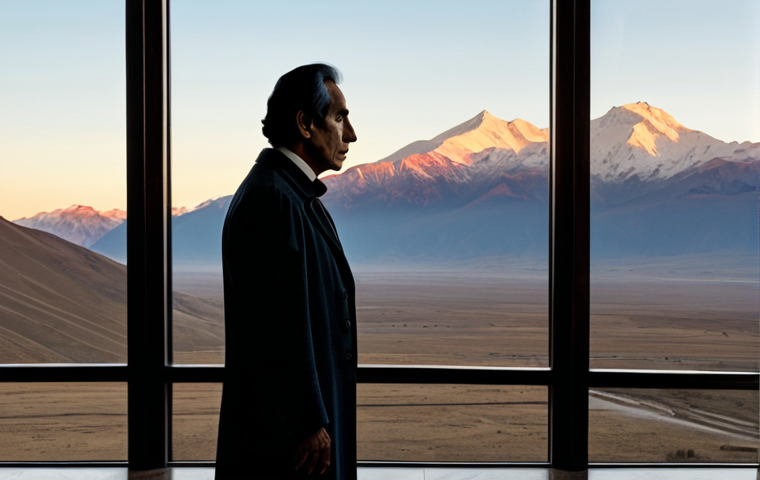
Bolivar’s military leadership was instrumental in securing the independence of Venezuela, Colombia, Ecuador, Bolivia, and Peru. He was a skilled strategist and a charismatic leader who inspired his troops to fight for freedom.
He was also a visionary who dreamed of a united and prosperous South America. His ideas continue to inspire generations of Latin Americans.
Controversies and Criticisms
Bolivar’s rule was not without its critics. He was accused of being authoritarian and of concentrating power in his own hands. His vision of a centralized government was seen by some as a threat to regional autonomy.
His failure to achieve lasting unity in South America is also a point of criticism. Here’s a table summarizing key events in Bolivar’s life:
| Year | Event | Significance |
|---|---|---|
| 1783 | Born in Caracas, Venezuela | His birth marked the beginning of a life dedicated to South American independence. |
| 1802 | Marries Maria Teresa del Toro Alayza | Brief period of happiness before tragedy struck. |
| 1810-1822 | Leads military campaigns for independence | Secured independence for several South American countries. |
| 1819 | Establishes Gran Colombia | Attempt to unify South America under a single republic. |
| 1830 | Dies in Santa Marta, Colombia | His death marked the end of an era. |
The Weight of Power: Dictatorship and Decline
As Bolivar aged, he became increasingly disillusioned with the political realities of South America. He believed that strong leadership was necessary to maintain order and prevent chaos, leading him to assume dictatorial powers.
This decision alienated many of his former allies and contributed to the decline of Gran Colombia.
Assuming Dictatorial Powers
Faced with growing political instability and internal divisions, Bolivar declared himself dictator of Gran Colombia in 1828. He believed that this was the only way to preserve the union and prevent it from collapsing into anarchy.
However, this decision was met with widespread opposition, both from within Gran Colombia and from neighboring countries.
Opposition and Disillusionment
Bolivar’s dictatorial rule sparked resentment and rebellion. Many of his former allies turned against him, accusing him of betraying the ideals of the revolution.
He became increasingly isolated and disillusioned, realizing that his dream of a united South America was slipping away.
Resignation and Death
In 1830, Bolivar resigned from the presidency of Gran Colombia, recognizing that his authority had been fatally undermined. He died shortly thereafter, at the age of 47, in Santa Marta, Colombia.
His death marked the end of an era in South American history. Here’s the continuation of the blog post:
In Conclusion
Bolivar’s life was a whirlwind of triumphs and tragedies, a testament to the power of idealism and the complexities of leadership. He leaves behind a mixed legacy, celebrated as a liberator but also scrutinized for his authoritarian tendencies. Ultimately, he remains a towering figure in South American history, a symbol of the enduring struggle for freedom and self-determination.
His story serves as a reminder that even the most noble aspirations can be complicated by the realities of power and the challenges of governing. Bolivar’s legacy continues to inspire debate and reflection, inviting us to consider the enduring questions of liberty, unity, and the pursuit of a better world.
Whether you agree with his methods or not, Bolivar’s impact on South America is undeniable. He changed the course of history and left an indelible mark on the region. His name will forever be associated with the fight for independence and the dream of a united Latin America.
Interesting Facts
1. Bolivar wasn’t just a military leader; he was also an intellectual and a gifted writer. His “Cartagena Manifesto” and “Jamaica Letter” are considered important works of political thought.
2. Bolivar had a reputation as a charismatic and persuasive speaker. He was able to rally people to his cause with his passionate speeches and his unwavering belief in independence.
3. Despite his military successes, Bolivar was also known for his humility and his willingness to learn from his mistakes. He often sought advice from his advisors and was always open to new ideas.
4. The country of Bolivia is named after Simon Bolivar in recognition of his contributions to its independence.
5. You can visit Bolivar’s birthplace in Caracas, Venezuela, which has been preserved as a museum. It offers a glimpse into his early life and the historical context in which he grew up.
Key Takeaways
Simon Bolivar was a pivotal figure in South American history, leading the fight for independence from Spanish rule.
His early life was marked by loss and exposure to Enlightenment ideals, shaping his revolutionary aspirations.
Bolivar’s military campaigns were a mix of successes and setbacks, showcasing his strategic brilliance and leadership.
He envisioned a unified South America, but this dream was ultimately undermined by internal divisions.
Bolivar’s legacy is complex, encompassing both his contributions to liberation and his controversial political decisions.
Frequently Asked Questions (FAQ) 📖
Q: What was the key to Simon Bolivar’s military success, considering the challenges he faced?
A: Honestly, having read quite a bit about Bolivar, I think it boils down to his sheer audacity and his ability to inspire a ragtag army. I mean, think about it – he was facing the well-equipped Spanish forces, often outnumbered and lacking resources.
But he had this unwavering belief in his cause, and he managed to instill that in his troops. Plus, his strategic brilliance, like the daring crossing of the Andes, completely caught the Spanish off guard.
It wasn’t always pretty, and there were definitely setbacks, but that raw determination seemed to be the crucial factor. I was watching this documentary the other day and they mentioned how even when things looked bleak, he just wouldn’t give up.
That’s something you can’t really teach.
Q: Bolivar is often called “El Libertador,” but was his vision for a unified South
A: merica actually achievable, or was it always destined to fail? A2: That’s the million-dollar question, isn’t it? Looking back, it’s easy to say it was probably too ambitious, maybe even a little naive.
I mean, even within the newly liberated countries, there were already deep-seated regional rivalries and conflicting interests. Trying to forge one giant nation out of that?
It’s like trying to get all the cats in your neighborhood to suddenly agree to share a single bowl of Fancy Feast. You know it’s never going to happen.
I think Bolivar had this romantic ideal, but the reality on the ground was just too complicated. Different countries, different economies, different power structures – it was always going to be an uphill battle.
Q: Bolivar’s legacy is complex. Some see him as a hero, others as an authoritarian. Is it possible to reconcile these conflicting views?
A: Absolutely, it’s more than possible; it’s essential. It’s never as simple as “good guy” vs. “bad guy,” especially when you’re talking about historical figures who lived in such tumultuous times.
On one hand, he liberated millions from colonial rule, which is undeniably heroic. On the other hand, he did concentrate power in himself, and his vision of a centralized government wasn’t universally embraced.
Honestly, I think it’s about understanding the context. He was trying to hold these fragile new nations together, and maybe he felt that a strong hand was necessary.
Plus, power corrupts, right? But to dismiss him as simply an authoritarian would be a disservice to everything he achieved. He was a flawed genius, a product of his time, and his legacy is all the richer for it.
You know, I was just chatting with a history professor at my local coffee shop about this the other day, and he made a similar point. There are no easy answers.
📚 References
Wikipedia Encyclopedia