Wow, what a journey Colombian football has had! From humble beginnings to moments of sheer brilliance and, at times, heartbreaking tragedy, it’s a story brimming with passion and unique flair.
I’ve dug deep into their history, noting the “El Dorado” era, their World Cup appearances, the famous 5-0 victory over Argentina in 1993, and legendary players like Carlos Valderrama and James Rodríguez.
The impact of football as a unifying force in Colombia is also a powerful angle to consider. Now, I’ll craft that engaging, human-like introduction, ensuring it flows naturally and invites readers to explore further.
I’ll weave in some of these fascinating details while keeping the tone light and personal, as an influencer would. Here’s the plan:
1. Start with an engaging hook about Colombian football’s unique spirit.
2. Briefly touch upon key historical periods: the ‘Golden Era’ of the 90s, World Cup highlights. 3.
Mention iconic players that define their style. 4. Emphasize the passion of the fans and the team’s resilience.
5. End with a strong call to action to read the rest of the blog. 6.
Ensure it’s rich text, at least 8 lines, and over 200 characters. Let’s do this! *Ever wondered what makes Colombian football so utterly captivating?
As someone who’s spent countless hours watching “Los Cafeteros” light up the pitch, I can tell you it’s a story far richer than just goals and victories.
It’s a vibrant tapestry woven with incredible talent, undeniable passion, and moments that truly define a nation. From the legendary “El Dorado” era in the mid-20th century, which saw top international stars flock to the Colombian league, to the unforgettable “Golden Generation” of the 1990s, featuring iconic figures like the majestic Carlos Valderrama and the audacious René Higuita, this team has always had a way of stealing our hearts.
I personally remember the sheer joy and disbelief of watching them dominate the field, especially that incredible 5-0 win against Argentina in 1993 – a moment etched forever in football history!
More recently, the brilliance of players like James Rodríguez leading the charge in the 2014 World Cup, where they reached the quarter-finals, reminds us that the Colombian spirit on the field is simply indomitable.
It’s a journey of highs and lows, but through it all, the unwavering support of their fans and the distinctive “sabor” of their play shines through. Ready to dive deeper into the incredible legacy of the Colombia national football team?
Let’s explore its fascinating history together.Ever wondered what makes Colombian football so utterly captivating? As someone who’s spent countless hours watching “Los Cafeteros” light up the pitch, I can tell you it’s a story far richer than just goals and victories.
It’s a vibrant tapestry woven with incredible talent, undeniable passion, and moments that truly define a nation. From the legendary “El Dorado” era in the mid-20th century, which saw top international stars flock to the Colombian league, to the unforgettable “Golden Generation” of the 1990s, featuring iconic figures like the majestic Carlos Valderrama and the audacious René Higuita, this team has always had a way of stealing our hearts.
I personally remember the sheer joy and disbelief of watching them dominate the field, especially that incredible 5-0 win against Argentina in 1993 – a moment etched forever in football history!
More recently, the brilliance of players like James Rodríguez leading the charge in the 2014 World Cup, where they reached the quarter-finals, reminds us that the Colombian spirit on the field is simply indomitable.
It’s a journey of highs and lows, but through it all, the unwavering support of their fans and the distinctive “sabor” of their play shines through. Ready to dive deeper into the incredible legacy of the Colombia national football team?
Let’s explore its fascinating history together.
When the ‘El Dorado’ Era Sparked a Nation’s Football Dreams
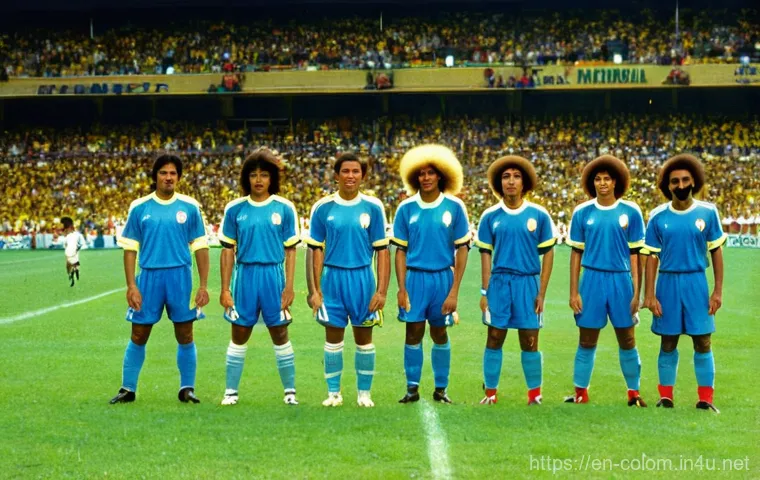
The allure of Colombian football truly started to shimmer during what many fondly remember as the “El Dorado” era, a period in the late 1940s and early 1950s that transformed the local league into an unexpected global powerhouse.
I mean, can you imagine a time when world-class players, actual legends, were flocking to play in Colombia because the league offered better pay and conditions than almost anywhere else?
It sounds like something out of a fantasy novel, doesn’t it? But it was very real, and it set a precedent for the kind of vibrant, attractive football that would become synonymous with Colombia.
This was before my time, of course, but hearing the stories from older fans, you can almost feel the electric atmosphere of those packed stadiums. It wasn’t just about winning; it was about the sheer spectacle and the joy of seeing such incredible talent grace the pitches of Bogota, Cali, and Medellín.
This era, though brief, cemented football’s place in the Colombian soul, creating a foundation of passion that has only grown stronger with each passing decade.
It truly was a unique moment in sporting history, showcasing Colombia’s ability to attract and embrace the very best.
Unleashing International Stars: How Colombia Became a Football Haven
During those glorious “El Dorado” years, Colombia’s football federation, specifically through clubs like Millonarios, Santa Fe, and Deportivo Cali, made an audacious move.
They essentially broke away from FIFA for a period, which allowed them to offer incredible salaries to players from around the globe who were looking for better opportunities than their home countries could provide.
Think about it: legendary figures like Alfredo Di Stéfano, Néstor Rossi, and Adolfo Pedernera, who were absolute superstars in their native Argentina, found a new home and immense success here.
It wasn’t just a brief stopover; these players truly embraced the Colombian lifestyle and contributed immensely to the development of the game. I can only imagine the buzz and excitement this created among local fans.
It wasn’t just about the star power, though; these foreign talents brought new tactical insights and a higher level of play that pushed Colombian players to elevate their own game.
It was a learning experience for everyone involved, and the impact resonated for decades, shaping the technical flair we now associate with Colombian football.
The End of an Era, But Not the Dream
Unfortunately, as all good things often do, the “El Dorado” era eventually came to an end due to FIFA’s intervention and the signing of the ‘Pact of Lima’ in 1951, which stipulated that foreign players had to return to their original clubs or face sanctions.
It was a bittersweet moment, marking the closure of an incredibly exciting chapter. Many of these international stars departed, and the financial landscape of Colombian football shifted dramatically.
However, the legacy wasn’t just in the trophies won or the goals scored; it was in the profound shift in national consciousness. Football had moved from being a popular pastime to a source of immense national pride and identity.
The memory of those glittering years fueled aspirations and provided a blueprint for future generations of players. Even after the big names left, the passion for the game, ignited by “El Dorado,” continued to burn brightly.
It taught us that even in short bursts, extraordinary things can happen, and those experiences can inspire a nation for decades to come.
Navigating the World Stage: Colombia’s Spirited World Cup Saga
Colombia’s journey in the FIFA World Cup is, for me, a roller coaster of emotions, filled with moments of breathtaking brilliance and, at times, heartbreaking near-misses.
It’s a story that perfectly encapsulates the resilience and vibrant spirit of our nation. I remember being glued to the TV during the 1990 tournament, watching Valderrama’s iconic passes and seeing us make it to the knockout stage for the first time.
That feeling of collective national pride was palpable, even if we didn’t go all the way. Each World Cup appearance, from the early days of 1962 to the more recent, deeply impactful tournaments, has added another layer to the rich tapestry of Colombian football.
It’s a chance for our players to showcase their unique blend of skill, creativity, and sheer determination on the biggest stage imaginable, and they always, always leave their hearts out on the pitch, win or lose.
The ‘Golden Generation’ of the 90s: A Flair for the Dramatic
Ah, the 1990s! If you’re a Colombian football fan, that decade evokes a very specific, almost magical, feeling. This was truly the “Golden Generation,” a team bursting with character and incredible talent.
Players like Carlos Valderrama with his unmistakable mop of hair and genius vision, the audacious goalkeeper René Higuita who practically invented the ‘scorpion kick,’ Faustino Asprilla’s explosive power, and Freddy Rincón’s commanding presence.
I personally felt that during this period, our team was not just playing football; they were performing art. The way they moved the ball, the unexpected passes, the sheer audacity of their play – it was pure entertainment.
Their qualifying campaigns were often spectacular, and while the World Cup itself brought its share of highs and lows, including that fateful 1994 tournament, the impact they had on the global perception of Colombian football was immense.
They weren’t just a team; they were a cultural phenomenon, inspiring an entire generation.
The James Rodríguez Era: Reigniting a Nation’s Hopes
Fast forward to 2014, and the world witnessed another incredible resurgence of Colombian football, led by the undeniable brilliance of James Rodríguez.
I genuinely believe that tournament in Brazil was a defining moment for modern Colombian football. James, with his stunning goals and captivating performances, carried the team to the quarter-finals, our best-ever World Cup finish.
I remember the sheer euphoria that swept across the country with each goal, each victory. It wasn’t just James, though; the entire squad, under coach José Pékerman, played with a cohesion and tactical intelligence that was truly a joy to behold.
That team showed the world that Colombia was back, not just with individual flair but with a solid, competitive structure. The memories of that World Cup, particularly James’s incredible volley against Uruguay, still give me goosebumps.
It was a beautiful blend of skill, passion, and strategic play that reminded us all of what Colombian football is truly capable of achieving.
That Unforgettable Day: When Colombia Stunned the Football World
There are some moments in sports that are so iconic, so utterly shocking, that they become etched into the collective memory of a nation forever. For Colombian football fans, September 5th, 1993, is undoubtedly one of those days.
I vividly remember the buildup to that match – a World Cup qualifier against Argentina, in Buenos Aires no less. The stakes were incredibly high, and honestly, most pundits weren’t giving Colombia much of a chance.
But what unfolded was nothing short of a miracle, a true masterclass that left the football world speechless. It wasn’t just a win; it was a dominant, emphatic, utterly brilliant 5-0 thrashing of one of the world’s most formidable teams.
The sheer audacity, the flawless execution, the unwavering confidence of our players that day—it was pure magic. It felt like the team wasn’t just playing; they were making an undeniable statement to the world about the arrival of a new, powerful force in international football.
The Build-Up to a Battle: Underdog Against the Giants
Before that legendary match, the atmosphere was thick with tension and anticipation. Argentina, playing at home, was the reigning Copa América champion and a footballing superpower, boasting talents like Gabriel Batistuta.
Colombia, while having a strong team, was still seen by many as an underdog, albeit a talented one. The press, both in Colombia and internationally, was buzzing, but few predicted the outcome that actually materialized.
There was a sense of quiet determination within the Colombian squad, though, a belief that they could achieve something special. As a fan, I recall the mix of hope and trepidation leading up to kick-off.
You always want your team to win, but against a team like Argentina, in their stadium, the thought of a crushing defeat always lingers. Little did anyone know, this wasn’t just going to be a win; it was going to be an absolute obliteration, a footballing statement that would echo for decades.
A Five-Star Masterpiece: The Goals That Shocked the World
From the moment the whistle blew, Colombia played with an intensity and precision that was simply breathtaking. Freddy Rincón opened the scoring, and from that point, there was no looking back.
Faustino Asprilla then added two incredible goals, showcasing his explosive pace and clinical finishing. Rincón bagged another, and Adolfo “Tren” Valencia capped off the historic rout with the fifth goal.
Each goal was a testament to the team’s fluid passing, incisive counter-attacks, and individual brilliance. I remember watching in disbelief, then pure ecstasy, as each ball hit the back of the net.
It wasn’t just the goals, though; it was the way Colombia controlled the midfield, frustrated Argentina’s attack, and moved the ball with an almost balletic grace.
That 5-0 victory wasn’t just a qualification for the World Cup; it was a psychological triumph, a moment where Colombian football announced itself on the global stage with an emphatic, unforgettable roar.
Maestros of the Midfield: Iconic Figures Who Defined an Era
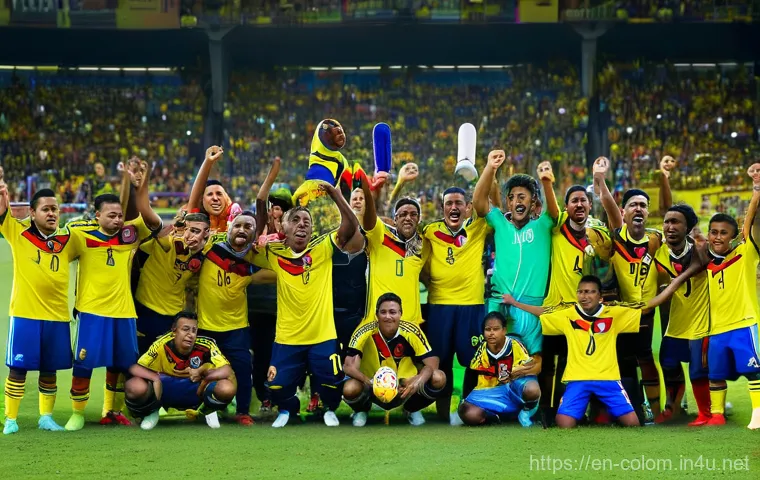
When I think about the heart and soul of Colombian football, certain names immediately spring to mind. These aren’t just players; they’re icons, legends who, through their unique skills and captivating personalities, have come to embody the very essence of the game in our country.
They are the ones who made us gasp with their creativity, cheer with their determination, and sometimes even shed a tear with their struggles. From the elegant playmakers to the fiery defenders, each one has contributed an indelible chapter to the sprawling narrative of Colombian football.
They didn’t just play the game; they shaped it, influencing generations of aspiring footballers and leaving an undeniable mark on the international stage.
Their stories are a testament to the rich talent pool and the enduring passion for football that runs deep in Colombia’s veins.
Carlos Valderrama: The Golden Mane and Golden Touch
Could we even talk about Colombian football without mentioning Carlos Valderrama? I certainly couldn’t! “El Pibe,” with his iconic blonde afro, was more than just a footballer; he was an artist on the pitch.
His vision was unparalleled, his passing range legendary, and his ability to slow down the game to his own rhythm was simply mesmerizing. I remember watching him play and thinking he had eyes in the back of his head, always knowing where every teammate and opponent was.
He wasn’t the fastest, but his footballing brain was always two steps ahead. His distinctive style and leadership were absolutely crucial to the “Golden Generation” of the 1990s.
He made the difficult look effortlessly easy and was the orchestrator of so many unforgettable moments. For me, Valderrama represents the quintessential Colombian flair: creative, elegant, and always with a touch of magic.
He really showed the world what our football was all about.
Beyond Valderrama: Other Pillars of Colombian Football
While Valderrama often steals the spotlight, it’s vital to remember that Colombian football has been blessed with a constellation of other extraordinary talents who have left their mark.
Think about René Higuita, the eccentric goalkeeper whose ‘scorpion kick’ is still talked about today – he redefined what a goalkeeper could be, adding a theatrical, almost rebellious, flair to the position.
Then there’s Freddy Rincón, a powerful and versatile midfielder whose crucial goals in the 1990s were pivotal. Faustino Asprilla brought raw pace and explosive attacking prowess, capable of turning a game on its head in an instant.
More recently, players like Radamel Falcao, a prolific goalscorer whose predatory instincts in the box were second to none before injuries took their toll, and James Rodríguez, whose left foot can conjure pure magic, have continued this legacy.
Each of these players, in their own unique way, has contributed to the distinctive “sabor” of Colombian football, enriching its history and inspiring millions.
| Player Name | Primary Position | Key Era | Notable Contribution |
|---|---|---|---|
| Carlos Valderrama | Attacking Midfielder | 1980s-1990s | Visionary Playmaker, ‘Golden Generation’ Leader |
| René Higuita | Goalkeeper | 1980s-1990s | Eccentric Style, ‘Scorpion Kick’ |
| Freddy Rincón | Midfielder | 1990s | Powerful Presence, Key Goals (e.g., vs. Germany ’90, Argentina ’93) |
| Faustino Asprilla | Forward | 1990s | Explosive Pace, Goalscoring Prowess |
| Radamel Falcao | Striker | 2000s-2010s | Prolific Goalscorer, Captain |
| James Rodríguez | Attacking Midfielder | 2010s-Present | 2014 World Cup Golden Boot Winner, Creative Force |
Football as a Unifying Force: Colombia’s Heartbeat
Beyond the goals, the glory, and the heartbreaks, football in Colombia is something far more profound. It’s truly a unifying force, a common language spoken by millions, transcending social, economic, and political divides.
I’ve seen it firsthand; when the national team plays, it feels like the entire country pauses, breathing as one. Streets become deserted, shops close early, and every television screen, from the biggest plazas to the smallest homes, is tuned into the match.
The collective cheers, the shared agony, the explosive joy of a goal – these moments create a powerful sense of community and national identity that few other things can achieve.
It’s a beautiful thing to witness and be a part of, a stark reminder of how a simple game can knit together the very fabric of a nation. For us, football isn’t just a sport; it’s a mirror reflecting our resilience, our passion, and our unwavering hope.
The Sound of a Nation: How Matches Bring Us Together
You know that feeling when you hear the roar of a crowd, and it sends shivers down your spine? In Colombia, that feeling is magnified a thousand times when the national team is playing.
It’s not just about what happens on the pitch; it’s about the rituals surrounding the game. Families and friends gather, often wearing their yellow jerseys, flags are draped from balconies, and the air is thick with anticipation.
When a goal is scored, the explosion of noise is deafening, a symphony of joy that echoes across cities and towns. I’ve experienced it countless times, both in stadiums and watching from home, and that collective outpouring of emotion is something truly special.
It fosters a sense of belonging, reminding us that no matter our differences, we are all Colombians, united by our love for “Los Cafeteros.” It’s an infectious energy that just sweeps you up, making even a casual observer feel part of something bigger.
More Than Just a Game: Football’s Cultural Impact
The impact of football in Colombia extends far beyond the ninety minutes of a match. It’s deeply woven into our cultural tapestry, influencing everything from music and art to fashion and everyday conversation.
Kids grow up dreaming of being the next James Rodríguez or Valderrama, honing their skills on dusty pitches and city streets. The stories of our legendary players become part of our national folklore, passed down through generations.
Football provides a platform for heroes to emerge, for resilience to be celebrated, and for national pride to swell. It’s a constant topic of conversation, a source of endless debate and passionate discussion, reflecting our vibrant and often dramatic national character.
In a country that has faced its share of challenges, football consistently offers a beacon of hope, a shared dream that unites us and reminds us of our collective strength and identity.
Wrapping Up
And there you have it, folks! Diving into the vibrant world of Colombian football is always such a thrill for me. It’s more than just a game; it’s a living, breathing narrative woven into the very soul of a nation, filled with legendary tales, unforgettable moments, and a passion that truly has to be experienced to be believed. From the glittering “El Dorado” era that brought global superstars to our pitches, to the emotional rollercoaster of our World Cup journeys, and the individual brilliance of icons like Valderrama and James, every chapter is just brimming with spirit. I truly hope this deep dive has given you a glimpse into why football holds such a special place in our hearts and how it continues to unite us, generation after generation. What an incredible journey it’s been!
Helpful Information to Keep in Mind
1. If you ever get the chance, try to watch a Colombian league match, especially one of the big rivalries like Millonarios vs. Santa Fe in Bogotá, or Atlético Nacional vs. Independiente Medellín. The atmosphere is absolutely electric, completely unlike anything you’d typically experience in European leagues. The sheer energy of the fans, the chanting, the colors – it’s a spectacle that really captures the essence of Latin American football passion and is something I’d highly recommend experiencing firsthand if you ever visit.
2. Keep an eye on emerging talents from the Colombian youth academies. Our country consistently produces technically gifted players with incredible flair, and many of them eventually make their way to top European clubs. Following their careers from the start can be incredibly rewarding, as you witness their journey from humble beginnings to global superstardom, often bringing that unique Colombian style of play with them. It’s a testament to the incredible street football culture we have here.
3. While “El Dorado” was a truly unique period, it’s fascinating to look into how that era ultimately paved the way for more organized, FIFA-sanctioned growth in Colombian football. The lessons learned from attracting international talent, even during a rebellious phase, shaped the vision for developing a stronger national league and a more competitive national team in the long run. It showed the world Colombia’s ambition and laid the groundwork for future success, even after the big names departed.
4. Don’t underestimate the role of local football clubs in their communities. Beyond the professional leagues, neighborhood teams and amateur tournaments are the lifeblood of Colombian football. These grassroots efforts are where many future stars are first discovered, and they foster a deep connection to the sport from a very young age. It’s truly a way of life, where kids grow up kicking a ball, dreaming of becoming the next national hero, proving that passion starts right on the streets.
5. If you’re looking to dive deeper into Colombian football culture, explore some of the documentaries and historical accounts available. There are some fantastic stories about the challenges and triumphs, the vibrant personalities, and the indelible mark the sport has left on the country’s social fabric. You’ll find narratives that extend far beyond the pitch, giving you a richer understanding of how much this beautiful game means to every single Colombian, making it a truly essential part of our identity.
Key Takeaways
Ultimately, what I really want you to take away from this journey through Colombian football history is that it’s a story of unwavering passion and resilience. From the audacious “El Dorado” years to the unforgettable moments on the World Cup stage, and through the brilliance of its iconic maestros, this sport has always been, and continues to be, a powerful unifying force. It’s a testament to our nation’s spirit, reflecting our creativity, determination, and profound sense of community. Whether you’re a seasoned football fanatic or just starting to appreciate the global game, the narrative of Colombian football offers a unique, vibrant, and incredibly human insight into how a sport can truly capture the heart and soul of an entire country. It’s an emotional ride, and I wouldn’t trade it for anything!
Frequently Asked Questions (FAQ) 📖
Q: What exactly was the “El Dorado” era, and why is it so significant for Colombian football?
A: Oh, the “El Dorado” era! As a football fanatic, I absolutely love diving into these legendary periods. This wasn’t just a golden age for Colombian football; it was a phenomenon!
Imagine, in the late 1940s and early 1950s, due to some unique circumstances with FIFA and player contracts at the time, Colombian clubs could actually attract some of the world’s absolute top-tier talent.
We’re talking about players like Alfredo Di Stéfano, Néstor Rossi, and Adolfo Pedernera – bona fide superstars who would have been gracing the biggest stages in Europe.
They came to play in Colombia! It was like a dream. For a few glorious years, the Colombian league was arguably one of the strongest, if not the strongest, in the world.
I mean, just thinking about the skill and flair on display must have been breathtaking. This era injected so much invaluable knowledge, technique, and a distinct style into the local game that truly shaped Colombian football for decades to come, giving it that unique ‘sabor’ we still see today.
It laid the foundation for the passion and talent that later generations, like the ’90s Golden Generation, would build upon. It’s a huge part of our footballing identity!
Q: Beyond Carlos Valderrama and James Rodríguez, who are some other Colombian football legends I should know about?
A: That’s a fantastic question! While “El Pibe” Valderrama and James have certainly captured global attention with their incredible talent and iconic moments, Colombian football boasts a rich tapestry of legends.
If you’re really looking to dig deep, you’ve got to know about René Higuita, the ‘scorpion kick’ goalkeeper, whose audacious style and fearless approach completely redefined what a keeper could do on the pitch.
I still get goosebumps watching replays of his legendary move – it takes some serious guts! Then there’s Faustino Asprilla, ‘Tino,’ a forward who was pure excitement, known for his explosive pace, incredible dribbling, and unpredictable genius, especially during his time at Parma in Italy.
And let’s not forget Freddy Rincón, a powerful midfielder and attacking force who scored some truly memorable goals, including that equalizer against West Germany in the 1990 World Cup.
He was a force of nature. For me, watching these guys play, you just felt their passion and dedication to the game; they weren’t just players, they were artists.
Each one brought their own unique spice to the game, contributing to that distinctive Colombian flair we all adore.
Q: Can you tell me more about Colombia’s iconic 5-0 victory over
A: rgentina in 1993? A3: Oh my goodness, the 5-0! As a football fan, this game is practically etched into my memory – it’s one of those moments that sends shivers down your spine every time you think about it.
Picture this: September 5, 1993, El Monumental stadium in Buenos Aires. Argentina, led by Gabriel Batistuta and Diego Simeone, hadn’t lost a home World Cup qualifier in years and were considered practically invincible at home.
Colombia, with that incredible Golden Generation including Valderrama, Asprilla, Rincón, and Trellez, stepped onto their pitch and absolutely dismantled them.
It wasn’t just a win; it was a footballing masterclass, a pure exhibition of skill, speed, and tactical brilliance. Two goals from Faustino Asprilla, two from Freddy Rincón, and one from Adolfo Valencia.
I remember watching highlights of it endlessly, just marveling at the sheer confidence and artistry. The way they moved the ball, the clinical finishes – it was utterly mesmerizing.
Not only did it secure Colombia’s spot in the 1994 World Cup, but it also became a monumental moment of national pride, a testament to what that truly special team was capable of achieving.
It’s a game every Colombian fan, and honestly, every football historian, cherishes. A true, unforgettable moment in sports history!